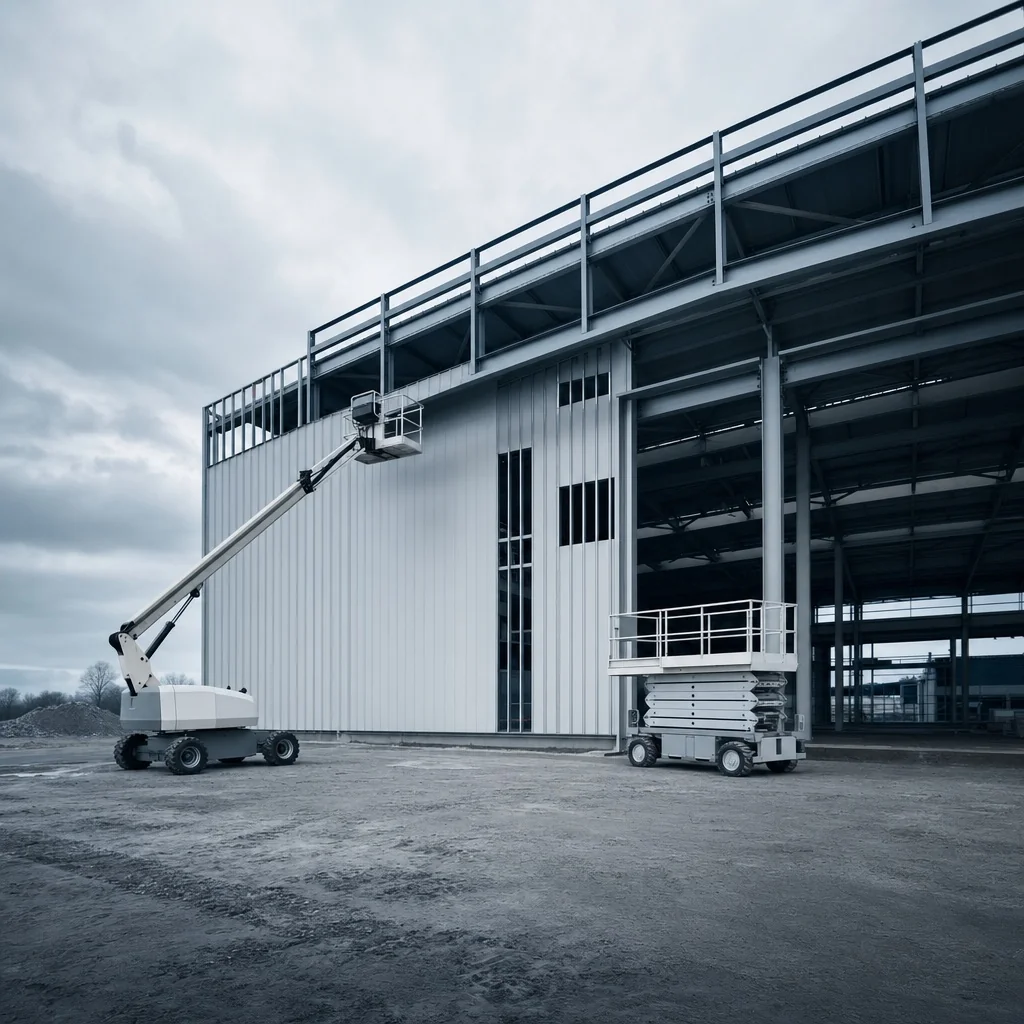
Plan the lift around the task height, floor strength, and approach room. Reading’s mix of wide warehouse aisles, tight retrofit work, and uneven outdoor lots often decides between compact electric slabs and rough‑terrain units.
Reading, PA is deep into an industrial renaissance—active warehouses, production lines, and adaptive‑reuse construction all need predictable vertical access. The regional climate and the hilly edges near Mount Penn add ground and weather variables that change which platform style fits the day’s work.
Start with the work geometry
Can the machine sit directly below the task? Scissor lifts excel when the platform can stage under the work with straight‑up travel.
How much outreach is needed? If you must reach over conveyors, mezzanines, or façade features, compare scissor lifts with booms at /aerial-lift-rental/.
What’s the working height and weight on the deck? Higher platforms narrow turning room and raise floor loading.
How Reading’s sites change the choice
Valley floors and concrete interiors: Smooth slabs in local distribution buildings favor electric scissor lifts for low noise and zero emissions. See /electric-scissor-lift-rental/.
Hilly edges and unfinished lots: Outdoor construction and graded surfaces point to rough‑terrain scissors with wider stance and tread. Details at /rough-terrain-scissor-lift-rental/.
Winter conditions: Snow and freeze periods often push exterior work to pause or move inside. Cold, wet surfaces reduce traction and can limit outdoor use windows; indoor electric units keep maintenance moving.
Common size bands and constraints
Compact electrics: Useful where doorway clearance and elevator loading matter. Typical applications include inventory picks, lighting, and line access in tight aisles.
Mid‑height slabs: Add deck space for tools and materials when ceiling work spans longer runs.
Rough‑terrain platforms: Wider wheelbase and higher ground clearance fit exterior framing, siding, and site utilities, provided ground support matches machine weight.
When a scissor isn’t enough
Obstructions overhead or side‑reach needs suggest articulating or telescopic booms at /boom-lift-rental/.
Palletized materials to height? Pair lifts with /forklift-rental/ or /telehandler-rental/ to keep platforms clear for people and tools.
Planning notes for Reading projects
Adaptive‑reuse interiors: Expect mixed floor ages and patch repairs. Confirm slab conditions before bringing in heavier platforms.
Mixed‑use streetscapes: Tight curb zones and slopes can limit staging; compact electrics often fit night or off‑hour work windows.
Equipment questions
Questions about Reading planning
What scissor lift works best for warehouse maintenance in Reading?
Electric slab scissor lifts fit smooth, indoor floors and typical aisle widths, providing quiet operation and vertical access for lighting, racking, and equipment service.
How do winter conditions affect outdoor scissor lift use?
Snow, ice, and freezing temperatures shorten safe outdoor windows and reduce traction. Many projects shift to indoor electric units until surfaces and weather improve.
When should I look at a boom lift instead of a scissor lift?
If the platform cannot sit below the task or obstacles block straight‑up travel, consider an articulating or telescopic boom at /aerial-lift-rental/ for up‑and‑over reach.